Grounded as a Way of Life
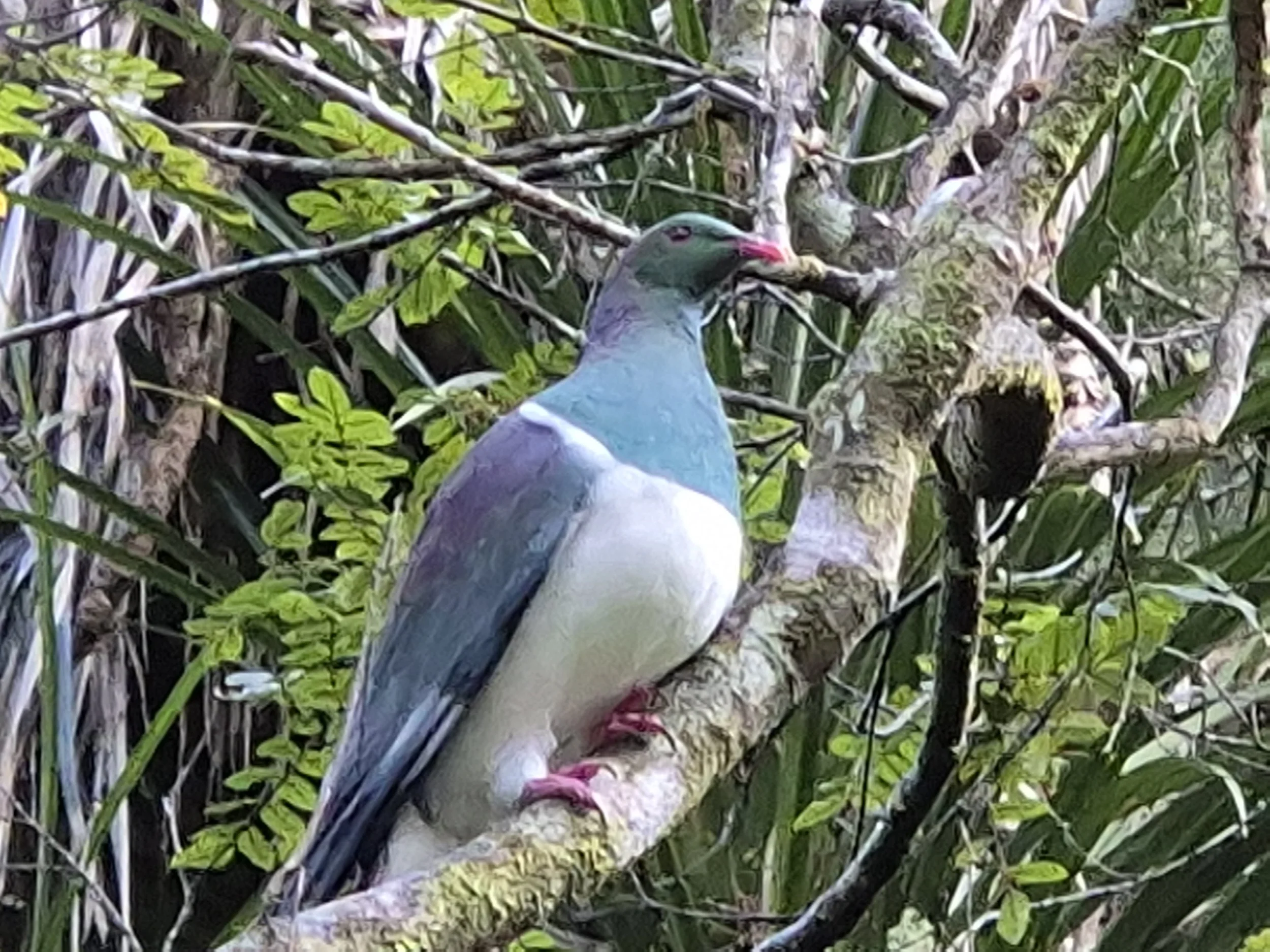
One of five kererū that landed beside the Hātea River Track while I was writing this article. A quiet reminder that grounding often begins with simply paying attention.
Why Life Feels Harder Than It Seems To For Some of Us
Over the years I've collected quite a few grounding practices.
Walking has always been one of them. Give me a bush track, the sound of water nearby and the gentle rhythm of putting one foot in front of the other, and I can almost feel my nervous system begin to exhale.
Yoga does something similar, as does working in the garden or standing quietly with my hands wrapped around a warm mug of tea while the morning slowly wakes up around me.
Those moments matter, and they've helped me through some extraordinarily difficult seasons.
But over the past few years I've realised something that has quietly changed the way I think about grounding altogether.
Grounded isn't something I do.
It's something I build.
That probably sounds like a strange thing to say. After all, most conversations about grounding focus on techniques – breathing exercises, mindfulness, time in nature, meditation. They're all valuable, and I still use many of them, but for me they're less foundation and more the fruit.
The real foundations lie in the everyday conditions my nervous system experiences.

When Life Feels Harder Than It Seems
For a long time, I couldn't understand why life seemed to feel harder for me than it appeared to for other people.
Not all of life.
There were plenty of things I was good at. I loved taking on new projects, and I thrived on learning, on creating, on solving problems. From the outside, my life probably appeared full and productive, with businesses to build, governance roles, adventures to chase, gardens to create, and ideas brought to life.
And I genuinely loved it.
What puzzled me was that alongside all that enthusiasm was an exhaustion I couldn't quite explain.
There seemed to be a pattern that repeated itself over and over again. I'd throw myself wholeheartedly into something that mattered, and eventually my body would begin tapping me on the shoulder. If I didn't notice, the tap became louder, and if I still didn't listen, it eventually found ways to stop me altogether.
I wondered whether I simply needed to become more organised, more disciplined, somehow better at managing life.
It never occurred to me that perhaps there was nothing wrong with me – it wasn't that I needed to be fitter, or thinner, or had some inexplicable medical issue making me exhausted. It was my nervous system doing what it was designed to do.
Understanding the Dual-Wired Nervous System
That shift in perspective took years and certainly didn't happen all at once.
As I gradually began to understand more about being both highly sensitive and high sensation seeking, pieces of the puzzle started falling into place. Suddenly it made sense that I could crave challenge and novelty while becoming overwhelmed by too much stimulation.
The two parts of my nervous system weren't fighting each other – they were simply responding to different needs.
Understanding that brought enormous relief.
But it also revealed something else.
Knowing why I felt the way I did wasn't enough on its own, because I needed to ask a much bigger question.
If this was how my nervous system experienced the world, what kind of life would actually support it?
I wasn't looking for a life without challenge. I was looking for a way of living that allowed challenge and recovery to exist in better balance.
When Your Life No Longer Supports Your Nervous System
Looking back now, I can see that my body had been trying to answer that question long before I knew how to ask it.
It wasn't betraying me.
It wasn't being difficult.
It was responding to the conditions I'd created around it.
That was a confronting realisation because those conditions weren't made up of dramatic, obvious things. They were made up of the ordinary fabric of everyday life.
I realised that the life I'd gradually built was no longer supporting the nervous system living within it. It had gradually become more than my nervous system could comfortably support. It required long drives to connect with friends and family, and there was a constant stream of projects I genuinely cared about, each one quietly drawing on my energy reserves.
There was a quiet, relentless pressure of responsibilities that, one by one, all seemed perfectly reasonable, and which, on their own, weren't the problem.
Together, though, they were asking more of my nervous system than it could comfortably keep giving, and after a lifetime of going full-tilt until my body forced me to stop, I finally recognised the ground beneath me was what needed to change.
My body knew that long before my mind caught up.
How Your Nervous System Responds to Everyday Life
I sometimes think we treat our nervous systems as though they only respond to today's events.
A difficult meeting.
A poor night's sleep.
An argument.
A busy week.
But our nervous systems are paying attention to something much broader than that.
They're responding to the life we've been living, to the rhythms we keep, the environments we inhabit, the expectations we carry, and the opportunities we allow ourselves for recovery.
Everyday experiences quietly become messages our nervous systems are constantly interpreting. Some tell us the world is safe enough to settle into, while others reinforce the feeling that we still need to remain alert, prepared or constantly on guard. Most of the time, those messages are so familiar we hardly notice them at all.
In other words, they're responding to the conditions we've been living within, often for months or even years.
That understanding changed the questions I was asking.
Instead of wondering what was wrong with me, I became curious about what my nervous system had been trying to tell me all along, and what it might need to finally feel supported rather than continually on guard.
Grounded Begins with Understanding
That's where Grounded begins.
Not with a breathing exercise or a mindfulness app, although both can be wonderfully helpful.
It begins with understanding, with recognising that our experiences often make far more sense than we've been led to believe.
Over the coming weeks we'll explore why life can feel harder than it seems to for some of us, what it means to be dual-wired, how our surroundings shape our capacity, and why creating a balanced life begins long before we reach for techniques to calm ourselves.
Because perhaps the goal isn't to become someone who can simply cope with more.
Perhaps it's to understand ourselves well enough to gradually create a life that sends our nervous system more signals of safety than signals of threat.
Not because life will ever be finished. It won't.
But because our nervous systems can slowly learn that even in an unfinished, messy life, there is enough safety, enough restoration and enough support to begin living more fully, and protecting a little less.
For me, that's what being grounded has come to mean. Not a technique I reach for when life becomes overwhelming, but a way of living that gradually creates the conditions in which my nervous system can finally put down its guard.
The kererū (New Zealand native wood pigeon) in the photograph above was one of five that landed beside me while I was walking the Hātea River Track as this article was taking shape. I stood quietly for several minutes simply watching them. It felt like a fitting reminder that sometimes the most grounding moments arrive when we pause long enough to notice them.
If this resonated with you, I'd love to continue the conversation.
Join the A Balanced Life community to receive new Grounded articles, reflections and practical resources as they're released. It's where I share the ideas that don't always make it into a single blog post, and where this journey really begins.
