What Happens When Your Nervous System Carries Too Much for Too Long?
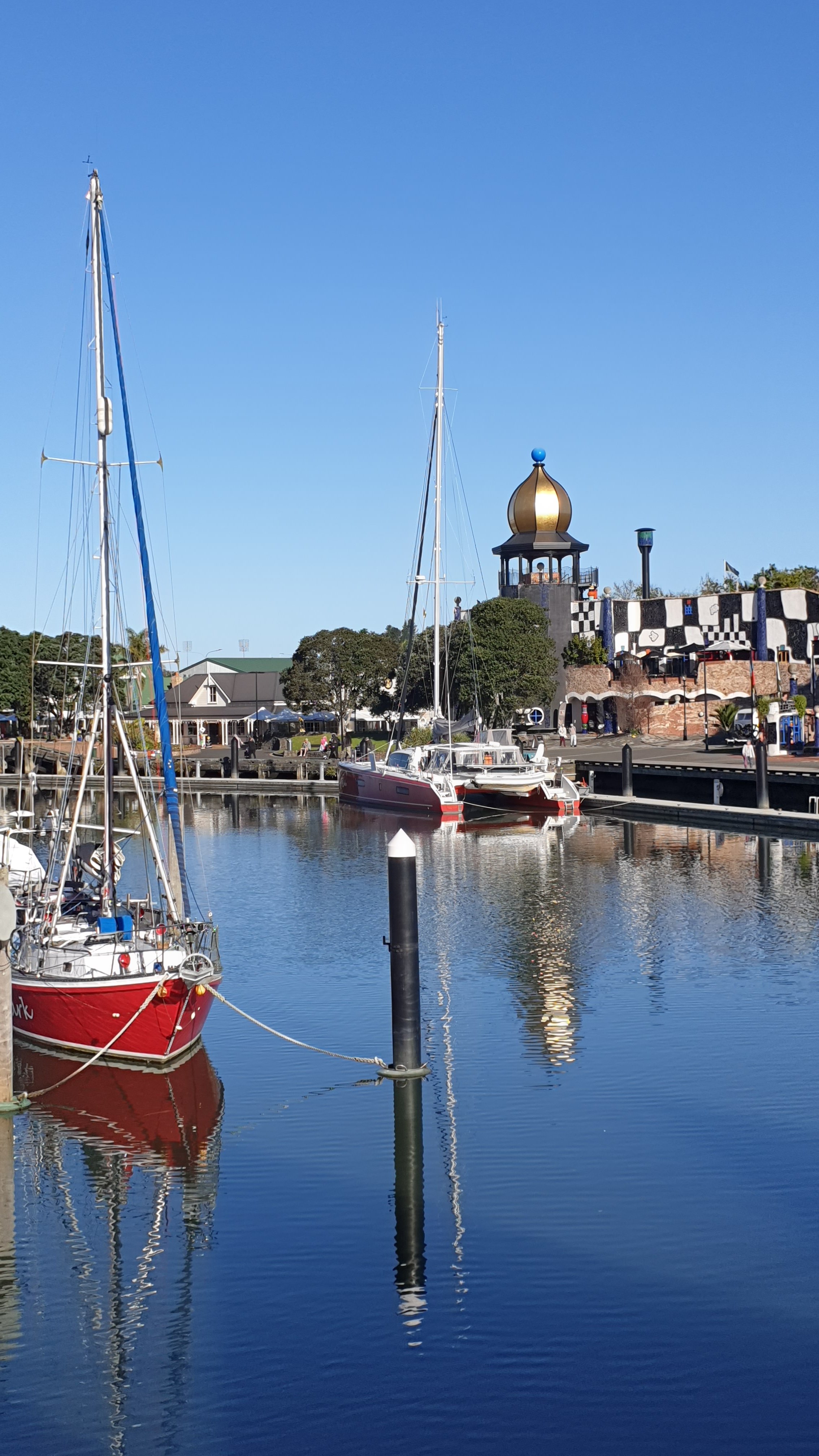
The Town Basin, just a short walk from our new home. After six months of navigating uncertainty, grief, excitement, and exhaustion, this harbour has become a fitting reminder that balance isn't about avoiding storms. It's about finding a place where you can safely anchor.
Sitting in the tranquil surroundings of our new home, with tui singing in the trees and the city centre only a short stroll away, it’s hard to believe we’ve ever lived anywhere else.
If you’ve been following me, you’ll know that the past six months have been a whirlwind of stress, emotions, and physical labour as my husband and I prepared to leave the home we lived in for more than thirty years (you’re probably tired of reading about it).
On paper, it was a house move, but in reality, it was something much bigger, and it became a lesson in balance.
It wasn’t the tidy, Instagram-worthy version of balance that so often gets talked about, but the messy, imperfect kind that gets tested when life asks more of you than you think you have to give.
It felt as though I was carrying my entire life in my hands, with boxes to pack, gardens to sort, decisions to make, paperwork to complete, deadlines to meet, and a property to prepare for sale.
Beneath all of that sat something far heavier: the reality of leaving a place that had held not only more than three decades of married life, but fifty years of my own story.
This was the home where my husband and I built our life together, and the surrounding farm was where I grew up, where four generations of my family walked the land before me.
Leaving was never going to be simple.

Living Between Two Worlds
What surprised me was not the grief — I expected that. What surprised me was what the experience revealed about how overwhelm actually happens now that I understand the high-sensitivity and high-sensation-seeking traits that are at the core of who I am.
Like many highly sensitive, high sensation-seeking women, I have spent much of my life living between two powerful forces.
Part of me craves adventure, novelty, challenge, creativity, and possibility, while the other part notices everything, feels everything, processes everything, and eventually becomes overwhelmed by everything.
For years, I thought balance meant finding the midpoint between those two parts of myself.
A compromise.
A place somewhere in the middle.
What this move taught me is that balance is something entirely different: not living halfway between sensitivity and intensity, but creating a life where both can coexist without constantly pulling against each other.
The Stack
Over the past six months, I wasn't carrying one challenge. I was carrying dozens, and layered over everything was the emotional weight of letting go, along with the sensory load of open homes, strangers walking through our sanctuary, and the constant disruption to routines that normally help me stay grounded.
And there were deadlines to meet — time pressure is a real kicker.
Each individual piece was manageable, but together they became something much heavier — more like the days of old when I ran on empty, trying to be all things to all people except myself.
And this is perhaps the most important lesson of all.
We rarely become overwhelmed because of one thing. More often, it is the accumulation of things — the stack.
A nervous system can carry an extraordinary amount for an extraordinary length of time, quietly adapting as each new demand arrives. Then one more thing gets added: another responsibility, more deadlines, another emotional demand, more physical pressure.
Suddenly, it feels as though everything is too much.
When the Nervous System Starts Waving the Red Flag
Unlike previous major life challenges, this time I could see clearly what was happening and worked to mitigate as much as I could. Even so, the exhaustion slowly seeped into my bones.
The emotional flooding, the inability to think clearly, the cravings for comfort and relief, and those moments where my body simply refused to cooperate signalled the all-too-familiar nervous system overload that precedes a major crash.
My nervous system was doing exactly what nervous systems do when they have been carrying more than they can comfortably handle.
What Actually Helped
Over the past half-dozen years, I’ve learned that pushing harder, becoming more disciplined, or finding a better productivity system don’t actually work for long. They can help, to a degree, but it’s the simple routines that often go by the wayside that have the biggest impact — getting enough sleep, walking in nature, and cooking nourishing food, taking the time to be with people I love, watching a familiar movie, and enjoying a quiet cup of coffee.
In other words, pausing before I reach complete collapse.
Again and again, I returned to the same lesson: rest doesn't get in the way of productivity. Rest is the thing making everything else possible.
Did I come through the past six months in a zen-like state of balance? Definitely not, but I weathered the storm and rode the waves a little steadier than I have in the past
Finding a Different Kind of Balance
Only a short time after moving into our new home, I already feel calmer than I have in years. Not because life is perfect — there are still boxes to unpack, gardens to redesign, and projects waiting patiently for attention — but because something fundamental has shifted.
For the first time in a very long time, my life feels aligned with my nervous system rather than constantly battling against it.
There are walking tracks nearby and nature on my doorstep. Community is close at hand, while the day-to-day pressure of maintaining a large rural property has fallen away. There is more space to breathe, more space to create, and perhaps most importantly, more space to simply be, which is oddly ironic when you consider I've come from wide open spaces and acres to roam.
And perhaps that is the lesson I will carry forward from all of this.
Creating Your Version of A Balanced Life
Balance is not a destination. It is not something we achieve once and then tick off a list.
It is a relationship with ourselves; a willingness to notice when the load is becoming too great, to rest before collapse, to let go of what no longer serves us, and to build a life that supports who we are rather than constantly fighting against it.
This move was always about changing how we live to create a more balanced lifestyle. It’s about creating our version of A Balanced Life, and the lessons of the past six months have reinforced exactly what that looks like as we move into the next phase of our lives.
We’ve distilled out the things that bring us the most joy and found a place where that’s easy to achieve — more time to hike in nature, on formed tracks where we’re not wading through mud; people nearby with a cosy, peaceful space we’re making our own; time for creativity and friends popping over; work a short stroll away, and an active lifestyle on our terms, not dictated by the place we live in.
What’s important to us won’t be the same for anyone else. Finding your version of balance, especially as highly sensitive, high sensation-seeking women, is key to A Balanced Life.
Over the coming months I'll be sharing more about nervous system balance, recovery, nourishment, embodiment, and the practical tools that help us navigate life as dual-wired women.
I'd love you to come along for the journey.
Walking along a mangrove boardwalk near the Hātea River in Whangārei, reflecting on balance, community, and life after a major transition.
