The Slow Work of Coming Home to Yourself
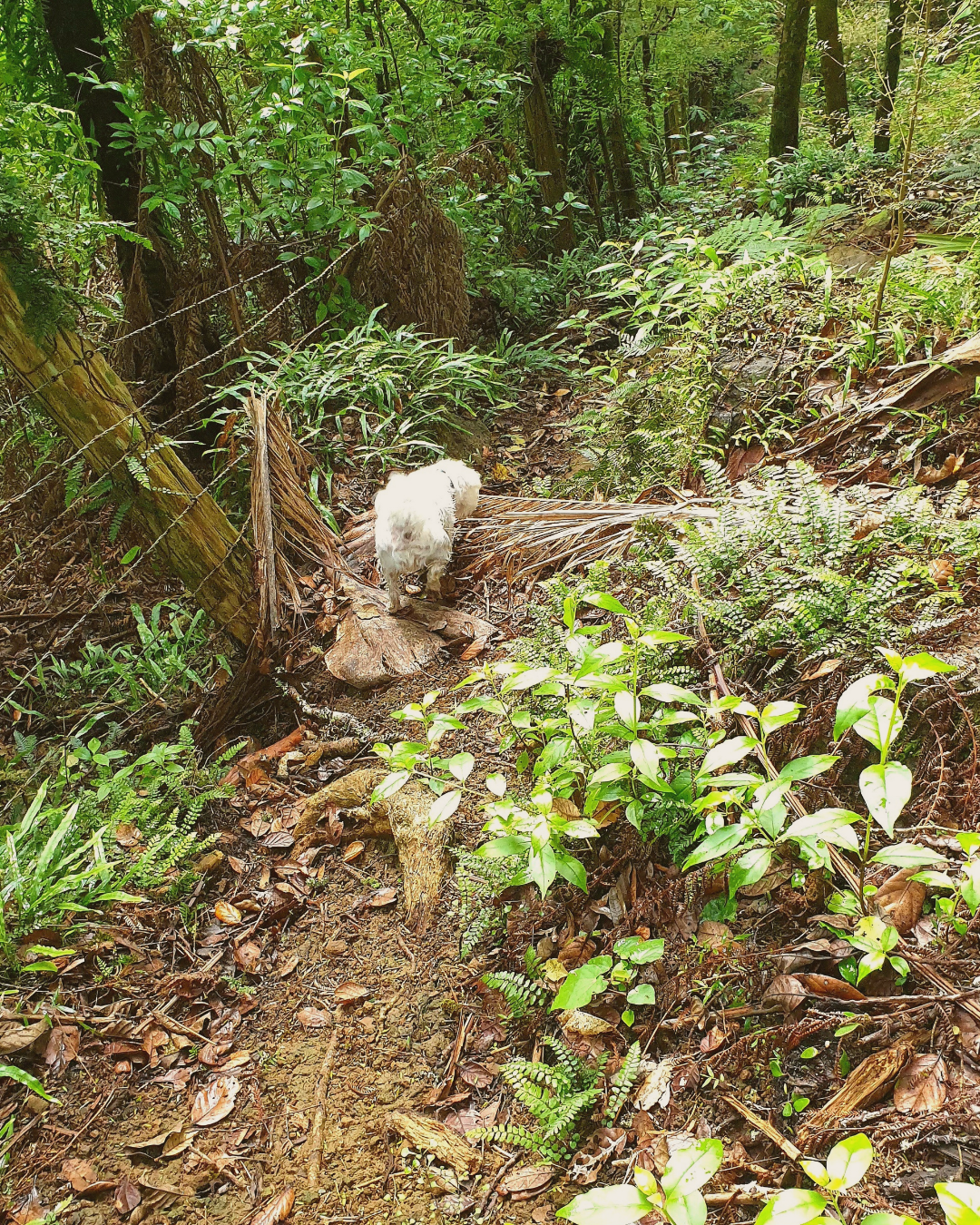
The path reveals itself as you walk it.
There are moments in life when you realise you’ve been living at a distance from yourself — a few steps ahead, a few steps away, or a few layers removed, not out of failure or neglect, but because no one taught you how to stay.
For many dual-wired women, the body becomes a place we monitor, manage, judge, try to improve, or simply tolerate. Our minds race ahead while our nervous systems whisper for rest. Our sensitivity absorbs everything; our fire tries to outrun it.
Coming home to yourself is the slow work of softening that distance.
It’s choosing presence, not perfection.
It’s remembering that the body you live in is not a project — it’s a companion.

The Body as Mirror
There have been seasons when the mirror felt like an enemy — reflecting back not who I was, but the stories I carried. Stories inherited from diet culture, childhood, comparison, grief, hormones, shame, trauma, and all the places my body changed without my permission.
The mirror never shows the whole truth. It reflects mood, belief, memory, nervous-system state, and the thousand small pressures we’ve internalised.
When you’re highly sensitive, the body holds emotional residue with exquisite precision.
When you’re high sensation seeking, you may burn for intensity, movement, momentum — even while the sensitive part of you longs for rest.
The mirror becomes a place where these two truths collide.
The Body as Armour, and as Sanctuary
There were years when my body felt like armour — the protection I never asked for but somehow needed. A way to make myself feel safer, less exposed, less judged. Armour forms slowly, shaped by difficult seasons, heartbreak, anxiety, and survival.
There were other years when my body felt like a sanctuary — the place I returned to through breath, walking, nourishment, small rituals, and the steadying truth that I was still here.
Dual wiring makes this dance even more complex.
Sensitivity can make the body feel porous, fragile, or easily overwhelmed, while sensation-seeking can make it feel alive, powerful, and hungry for experience.
Embodiment is the practice of letting both be true. Armour and sanctuary, protection and possibility — all held in one body.
When Transformation Is Slow (And Never Linear)
We love the idea of transformation being clean, quick, or cinematic, but real change — nervous-system change, identity change, embodied change — is rarely linear.
It looks more like:
clarity → setback → clarity
courage → fear → courage
progress → pause → deeper progress
softness → overwhelm → softness again
If you’ve ever felt frustrated by the pace of your becoming, please hear this:
The slow path is not the failing path. It is the integrating path.
When you’re dual-wired, integration matters more than speed. Your system needs spaciousness to absorb change without tipping into overwhelm or self-abandonment.
Learning to Stay With Yourself
Staying with yourself — especially in moments of discomfort, distortion, fear, or shame — is one of the most courageous forms of embodiment.
It means:
Noticing when you disconnect
Pausing before you leave yourself
Breathing into the place that feels tight or unfamiliar
Naming what’s true without judgement
Returning again and again to the body that is yours
This is the quiet work that shifts everything. It’s not glamorous, it is often unseen, but it’s the work that rewires how you treat yourself.
Some days it will feel natural, and others you will forget entirely. Both are part of the journey back to yourself.
Practices for the Long Road Home
These small practices help anchor embodiment in everyday life:
Gentle Noticing
Place a hand on your chest or stomach and simply notice — without trying to change anything. What’s here?
Micro-Movement
A walk, a stretch, a roll of the shoulders. Sensation seeking doesn’t need intensity; it needs aliveness.
Name the Moment
“I’m overwhelmed.”
“I’m leaving myself.”
“I’m coming back.”
Language creates inner pathways.
Slow Touch
A hand on the heart, a palm to the cheek, fingers at the collarbone. Touch reminds the nervous system that you are safe.
Choose Nourishment
Food, people, stories, environments — choose what builds capacity, not chaos.
These are not fixes. They are invitations. Ways of saying to your body, “I am here. I am learning to stay.”
Coming home to yourself is not a single moment. It is a rhythm — widening, contracting, softening, returning.
Some days you’ll feel close.
Some days you’ll feel far.
Both are part of the path.
You do not have to hurry, or do it perfectly, you only have to keep choosing the slow work of returning — again and again — to the body that has carried you through every chapter of your life.
