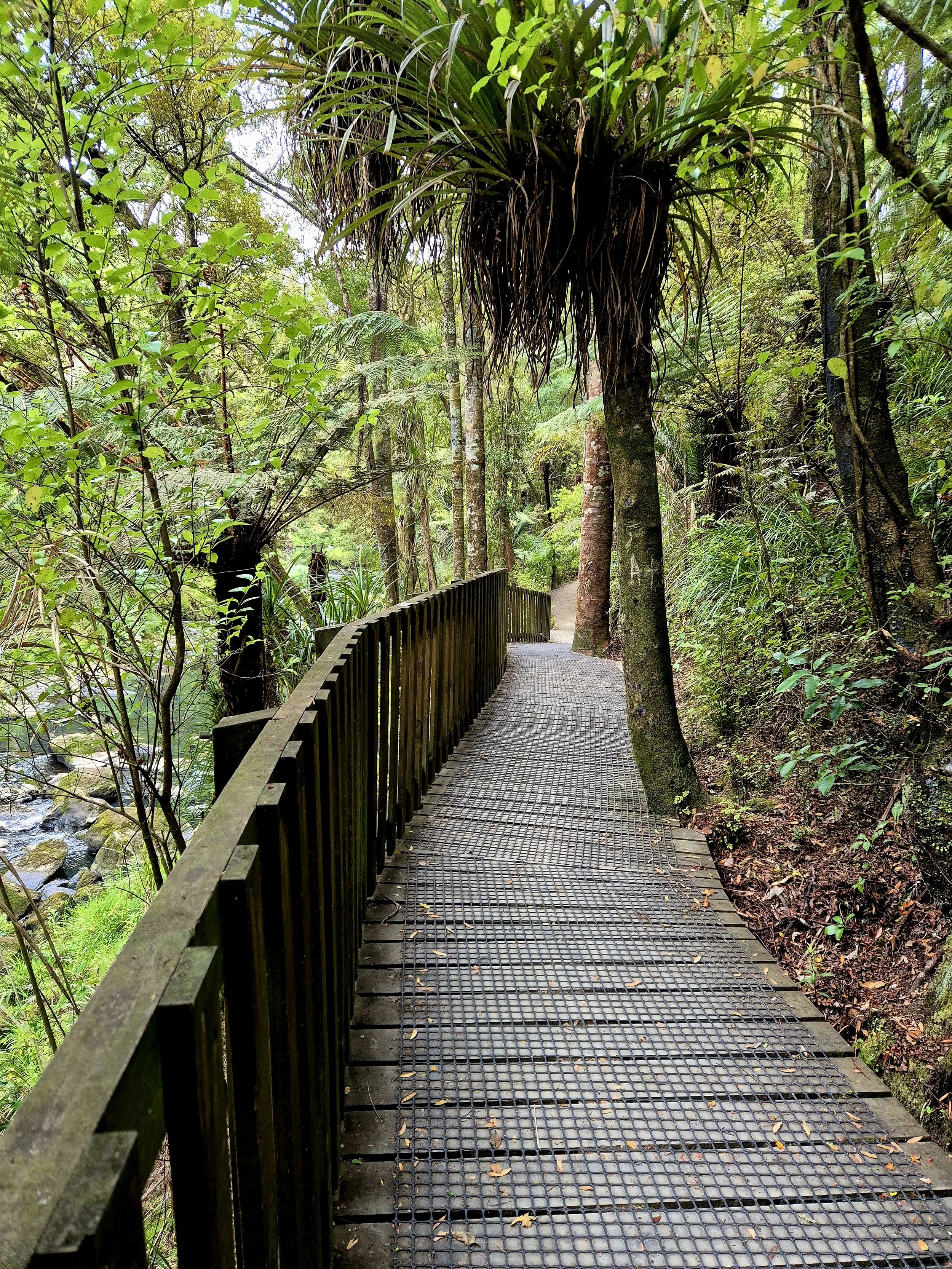
A different path opens up when we no longer feel we have something to prove.
For much of my life, I felt that whatever I did, however much I achieved or gave of myself, it was never quite enough.
I constantly strove but was never thin enough, fit enough, productive enough, capable enough, useful enough, or successful enough. Like a dog chasing its tail, I could never seem to keep up, and I felt I never did enough to justify stopping.
Knowing this belief drove so much of what I did wasn't the same as knowing how to change it. That took years to pull apart, noticing what happened when I pushed beyond my capacity, and figuring out why I was so exhausted all of the time.
For years, I tried to understand why I craved challenge, ideas, people, projects, and stimulation, only to find myself completely overloaded by the very life I'd created.
I kept asking the question that sits at the heart of Grounded for me:
What’s actually driving me?

When Understanding Yourself Changes the Story
One of the biggest pieces of the puzzle arrived when I finally understood that I have the traits of both high sensitivity and high sensation seeking. Until then, I often felt like I simply did not fit the world very well.
I always wanted novelty and challenge, to learn, create, lead, travel, and build things, and I threw myself wholeheartedly into whatever caught my attention until another part of me reached a point where the input was simply too much.
Too much noise, too many decisions, too many people, and too many things demanding something from me. Too many open loops hummed in the background of my mind.
For years I interpreted that contradiction as a personal failing. Why on earth could I just not keep up and keep going? Why was it that I needed more recovery than other people seemed to? And why could I be extraordinarily capable one week and then utterly flattened the next?
Understanding those two traits didn't suddenly make life easy, but it gave me an explanation that wasn't a judgement. I began to recognise that I wasn't inconsistent or failing; two genuine needs regularly pulled me in different directions.
Instead of asking what was wrong with me, I could start asking how my nervous system worked, what nourished me, and what I was carrying and doing simply because I always had.
When 'Girls Can Do Anything' Becomes 'Manage Everything'
For women of my generation, this had another layer. We grew up with the liberating message that girls could do anything.
In New Zealand, this message was actively promoted in the 1980s as women were encouraged into a wider range of work and professions, and thank goodness for that; I’m forever grateful to the women of previous generations for the opportunities this opened up for us.
Unfortunately, somewhere along the way, at least for some of us, possibility became tangled up with expectation.
We could have careers, contribute financially, care for families, manage homes, remain fit and “attractive”, maintain friendships, keep learning, and somehow cope with everything without visibly falling apart.
When we couldn't, it was easy to see that as personal inadequacy rather than impossible expectations.
For a highly sensitive, high sensation-seeking woman, that can be particularly combustible because one part of us genuinely wants a full, interesting life, while another is processing an enormous amount of information and eventually saying, 'Hold on a second. This is too much.'
And if, underneath it all, we believe our value depends on being useful, capable, or endlessly giving, we can turn even the things we love into evidence we present to prove we're enough. Work, income, fitness, the house, the garden, being the person who always manages: almost anything can get recruited as evidence of our worth.
Leaving Behind More Than a House
Our move into town this year brought much of this into focus. We sold the property where I'd spent most of my life, and that held decades of family history, grief, memory, and identity, so leaving wasn't simply a practical decision to downsize.
I had reached a point where I knew I no longer wanted the physical demands and isolation of that life. I wanted community, more everyday contact with people and family, somewhere I could walk, and still have enough peace and quiet to retreat into, with a garden where I could be creative.
Making that decision, and knowing it was the right one, didn't mean I was immediately at peace with it. For several months after we moved, I was still grieving what we'd left behind. Only recently, as we've unpacked more, put more of our art on the walls, and started to change the house to make it ours, have I felt myself begin to settle.
My nervous system seems to have finally caught up with the move, and I can say this is home, somewhere I feel safe.
I don't think I could have made that change without the groundwork I'd already done: recognising the beliefs that kept me striving, learning to notice overload, using breath and other ways of supporting my nervous system, and working through the grief and attachments that made letting go so difficult.
It hasn't meant I've sailed through this last year without becoming overwhelmed. Far from it. But I've been better able to recognise what was happening and to find my way back.
I also know how fortunate we are to have changed our circumstances. Downsizing has reduced financial and practical pressures in ways that make an enormous difference.
Not everyone can leave a job, move house or rearrange their responsibilities, and I would never suggest that enoughness is available only to women who can.
Our nervous systems live inside real lives, with work, mortgages, caregiving and all the other demands that cannot simply be breathed away. We can, however, start questioning what we believe we must do to be worthy, even when the circumstances around us are difficult to change.
Knowing You're Enough and Living as Though You Are
This is where I think some conversations about self-worth become far too tidy. I knew for years that I had a 'not enough' problem, but knowing it intellectually didn't stop me from organising my life around it.
Old beliefs can weave their way into our habits, relationships, ambitions, and even the things we think of as our strengths. Responsibility, helpfulness, high standards, and resilience are wonderful qualities that can also hide a fear that stopping, disappointing someone, or doing less will somehow make us less worthy.
For me, the shift hasn't come from telling myself to think more positively. It's come from gradually learning to live differently and discovering that I can be useful, capable, and interested in the world without making those qualities the measure of my worth or sacrificing myself to do them.
What Do I Actually Want?
Over the last few weeks I've noticed a sense of contentment that I don't think I've experienced before. Not because my life is finished — no way! The new gardens are only just starting, and I still have places I want to go, things I want to learn, and probably an unreasonable number of plants to acquire — not to mention a whole lot of novels to write!
With the feeling of being home comes a question that connects directly to last month's reflection on spending our precious life-energy:
If I really have nothing left to prove, what do I actually want my life to contain?
That's not necessarily an easy question for women who have spent years looking after others, doing what's required and being the capable one. We can become very good at knowing what everybody else needs, while losing touch with our own interests and desires.
I'm still working out my answer. I know that I want connection and community, and I also need solitude. I want to create, contribute, keep learning, and build work of my own, including A Balanced Life, without creating another life that uses up every scrap of my energy.
I need space for the high sensation-seeking part of me, which thrives on interesting possibilities, and for the highly sensitive part that needs the time and space to recover.
That is what Dynamic Balance means to me now.
It isn't a perfectly organised life or a permanent state of calm. It's an ongoing process of noticing what I need, making choices, experimenting, getting things wrong sometimes and adjusting without turning every misstep into another reason to criticise myself.
Enoughness doesn't mean giving up ambition or curiosity. I can want to become fitter without believing my body, as it is now, is unacceptable. I can want the garden to evolve without treating its unfinishedness and every weed as failure, or want A Balanced Life to grow without requiring it to prove that my skills and experience have value.
The difference is where those desires come from. Am I trying to repair a woman who isn't good enough, or am I an already-enough woman who is interested in what she might do next?
I can still work hard, take on challenges, and pursue things that excite me, and I can also stop when I'm tired, leave something unfinished, or decide that being capable of doing something isn't, by itself, a reason to spend my life-energy on it.
Read that again for a moment:
We can decide that being capable of doing something isn't, by itself, a reason to spend our life-energy on it.
I am enough exactly as I am, even with the unfinished garden, the work still to do and the plans I haven't yet figured out. I didn't arrive at that sentence because I read it on an Instagram tile. It took years of recognising what was driving me and slowly building a life that no longer needs to serve as proof.
That's what feels so different now. I still have plenty I want to do with the rest of my precious life; I just don't need any of it to prove I was worth being here in the first place.
I’m interested to know how this resonates with you. How much of what you do comes from genuinely wanting to do it, and how much is driven by the feeling that you still have something to prove? What would enoughness look like in your life?
If you’d like to explore more, join the A Balanced Life community at the link below.
In this month's companion video, I'm sharing a little more about the changes that have brought me to this point, from leaving our old home and finding my feet in a new one to reconsidering what I want the next part of my life to look like.
I also explore how being both highly sensitive and high sensation-seeking has shaped my choices, and why learning to live with a sense of enoughness doesn't mean giving up curiosity, ambition or the things that excite us.
What If There Is Nothing Left to Prove? — A personal reflection on enoughness, self-worth and creating a life that honours both our curiosity and our need for rest and recovery.
