When Life Interrupts Your Rituals
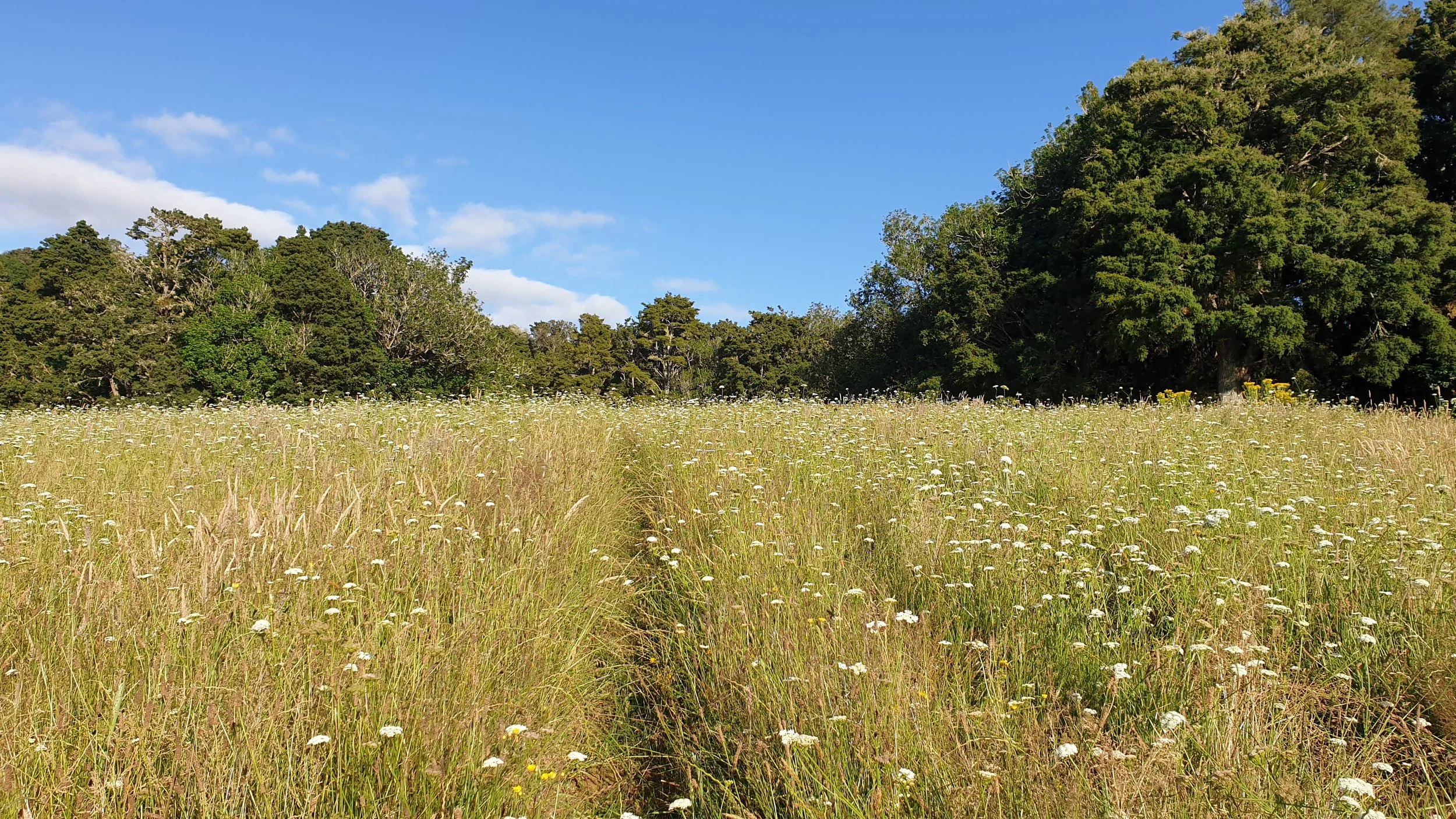
A small return to the body. A wide sky. A steady step forward.
There’s a particular kind of tired that doesn’t come from one dramatic event, but from the slow accumulation of days that never quite land. It’s the kind of fatigue that settles into your bones when you wake up already bracing, already carrying the weight of what still needs doing, and already trying to stay steady inside a life that refuses to slow down.
For the past five and a half weeks, that has been my reality.
My husband has been home for the school holidays, and together we’ve spent almost every day working on our property to prepare it for sale. Apart from Christmas Day and one Sunday, we’ve been in constant motion — painting, pruning, shifting, sorting, cleaning, fixing, making decisions, making lists, ticking things off, only to discover there are ten more things waiting underneath.
We’re not finished yet, and now he’s back at school, which means the timeline has tightened and the pressure has shifted into evenings and weekends, with the quiet hum of urgency threading itself through everything.
Underneath all of it sits the deeper truth: we’re letting go of the life we’ve lived for 32 years. That’s not a small decision or a tidy transition, it’s a full-body experience, and it has been asking more of me than I expected — emotionally, physically, and in the way it disrupts the rhythms I rely on to feel well.

When your routine breaks, your nervous system notices
One of the most humbling things I’ve learned about myself is how quickly my nervous system responds when the shape of the household changes.
When my husband is home, my routines tend to slide out of place, not because I don’t value them or forget how much they support me, but because the entire atmosphere shifts. The pace is different, the energy is different, the day is less predictable, and without even realising it, I start adapting to the new rhythm rather than holding my own.
Maybe you know this too.
You can be doing beautifully during the week. You’ve found your groove, and the practices that support your nervous system are woven into your days in a way that feels natural and steady. Then something changes — a partner is home more, children are on school holidays, work schedules shift, a family member needs you, a deadline arrives, life gets louder — and suddenly the rituals that keep you grounded become the first things to disappear.
Not because they don’t matter, but because you’re busy holding everything else.
Dual wiring makes disruption feel louder
When you’re both highly sensitive and high sensation seeking — what I call being dual-wired — these disruptions can feel like more than inconvenience. They can feel like internal chaos, because your system is trying to manage two truths at once.
High sensitivity means you take in more. You notice tone, pressure, subtle tension, unfinished tasks, emotional undercurrents, and the weight of uncertainty in a way that can be hard to switch off. Your nervous system absorbs the atmosphere around you, and when there’s a lot happening, it doesn’t take much for you to tip into overload.
High sensation seeking, on the other hand, brings a different kind of intensity. It craves momentum, novelty, movement, and meaning, and it often wants to fix, solve, progress, or push forward — even while the sensitive part of you is quietly asking for rest.
So when life becomes uncertain, when the path ahead isn’t clear, and there are too many moving pieces to hold in your mind at once, your inner world can start to spin. You might recognise the oscillation: anxiety and overwhelm on one side, then a sudden wave of excitement or determination on the other, followed by exhaustion, flatness, or a kind of emotional fog that makes it hard to feel anything clearly at all.
It’s not that you’re unstable; it’s that your nervous system is running hard, and uncertainty is an intense environment for a dual-wired woman to live inside.
The season we’re in: endings, shedding, and a new beginning
2026 already feels like a threshold year for me — a year of final transition, and the last loosening of an old skin before something new can form underneath. In many ways, this has been unfolding for a long time.
A few years ago, I stepped away from a public role that demanded a great deal of me, and then came the season of working alongside my husband at home, building a business together, and slowly realising it wasn’t the long-term path we wanted. He returned to teaching, and I was left face-to-face with a nervous system that had been running on stress hormones for too long.
That was the season I hit the wall.
Burnout, deep fatigue, and the realisation that I couldn’t think my way into wellness — I had to rebuild it from the ground up, inside my body, inside my daily life, and inside the way I related to myself.
It was during that rebuilding that I discovered the traits of high sensitivity and high sensation seeking, and suddenly I had language for what I’d been living with my whole life: two powerful forces pulling in different directions, one craving steadiness and softness, the other craving aliveness and expansion.
Now we’re here again, at another turning point.
Preparing to sell our home and property. Stepping away from what we’ve built over three decades. Moving into a season of uncertainty while we work out where we’ll live next and what the next chapter will look like.
It’s the kind of transition that tests everything you’ve learned about balance, because it doesn’t just ask you to stay steady — it asks you to stay steady while the ground is shifting beneath you.
When your practices slip, it doesn’t mean you’re failing
I’ve been struggling to maintain my balance lately, and I can feel it most clearly in the way my consistency has wobbled. Some of my best habits have slipped — not completely, but enough to remind me how quickly my nervous system responds when stress becomes sustained.
Cortisol rises, my mind speeds up, my body becomes tense and wired, and the simple things that support me start to feel harder to access, not because they’ve stopped working, but because I’m running on a kind of survival energy.
Fresh air. Movement. Breath. Yoga. Nourishing food. Quiet. All of the things I know are good for me are still there, and I still reach for them some of the time, but the steadiness isn’t as reliable as it is when life is calmer.
That’s the point where it begins to show, because my system doesn’t respond well to long periods of being wound up, and the dual wiring amplifies everything — the emotions, the thoughts, the sense of pressure, the urge to push, the urge to hide.
And yet, what I keep coming back to is this: slipping doesn’t mean the practices aren’t effective. It means they matter. When life becomes uncertain, they become even more important, and also, often, the first things we let go of.
Not because we’re lazy.
Because we’re human.
Perspective is part of regulation
One of the most powerful anchors for me right now isn’t a perfect routine. It’s perspective.
It’s remembering why we’re doing this, and what the deeper goal actually is.
We aren’t selling a property simply to create change for the sake of it. We’re moving toward a simpler lifestyle, one that doesn’t require constant maintenance and constant effort just to keep the wheels turning.
We want to be closer to hiking and running trails we can use all year round, closer to community, closer to town, and closer to the kind of daily life that supports long-term health rather than draining it. We still want native bush and birds and a sense of space, but without the relentless pressure of managing a large property, and without the feeling that the physical environment is always asking for more than we can comfortably give.
When I reconnect to that bigger picture, something in my nervous system softens. The stress becomes part of a process rather than a permanent state, and I can breathe again, because I remember that this is movement toward a life that will hold us better.
The non-negotiables I’m returning to
This season is teaching me, very clearly, what my non-negotiables are.
Not the “perfect morning routine” version, but the real-life version — the practices that hold even when life is messy, even when time is limited, even when my nervous system is tired and reactive.
For me, moving my body in nature is one of those foundations. Even when I don’t feel like it, especially when I don’t feel like it, a hill walk around the farm helps my system remember it belongs to the earth. The wide sky and the open air give my mind somewhere to unhook, and the movement brings me back into the body instead of living entirely inside my thoughts.
Yoga is another, not as a performance or a goal, but as a return to presence. It’s a reminder that I can come back to myself without fixing anything first, and that steadiness doesn’t require perfection, it requires contact.
And breath — always breath — not as a productivity tool, but as a bridge. A way back to the moment I’m actually in, rather than the imagined future my mind is racing ahead to manage.
These are not optional extras for me. They are the structure that keeps me steady enough to keep going.
If your life feels messy right now, begin here
If you’re in a season where your routines have fallen apart because life is asking more of you than usual, I want you to hear this gently: you don’t need to rebuild everything at once. You don’t need to create a whole new system overnight, and you don’t need to wait until life is calm before you begin again.
Start with one anchor.
Ask yourself, as simply as you can: what is the smallest thing that brings me back to myself?
Not forever, not perfectly — just today.
Maybe it’s ten minutes outside with fresh air on your face. Maybe it’s three slow breaths with your hand on your chest. Maybe it’s a nourishing meal, a stretch, a shower, a quiet moment without input, a walk without your phone, or a few minutes of gentle movement that reminds your body it’s still safe to live inside itself.
Your nervous system doesn’t need a complete overhaul. It needs proof that you haven’t abandoned yourself in the middle of change.
This is the slow work of becoming
Major life transitions are never tidy. They arrive in clusters, they interrupt our rhythms, they expose our edges, and they ask us to let go — again and again — of what used to feel stable.
But I’m learning to trust that this process is not pulling me off track.
It is the track.
It is one of the final layers of shedding, and one of the last chapters of an old life before something simpler and more aligned can emerge. The work isn’t about getting through it perfectly, or staying regulated every day, or proving that you’ve “mastered” balance.
The work is remembering how to return.
Again and again.
If you’d like support returning to steadiness through simple, nervous-system-rooted practices, you can explore Grounded here — the full program is coming soon.
