When Your Body Gets a Vote
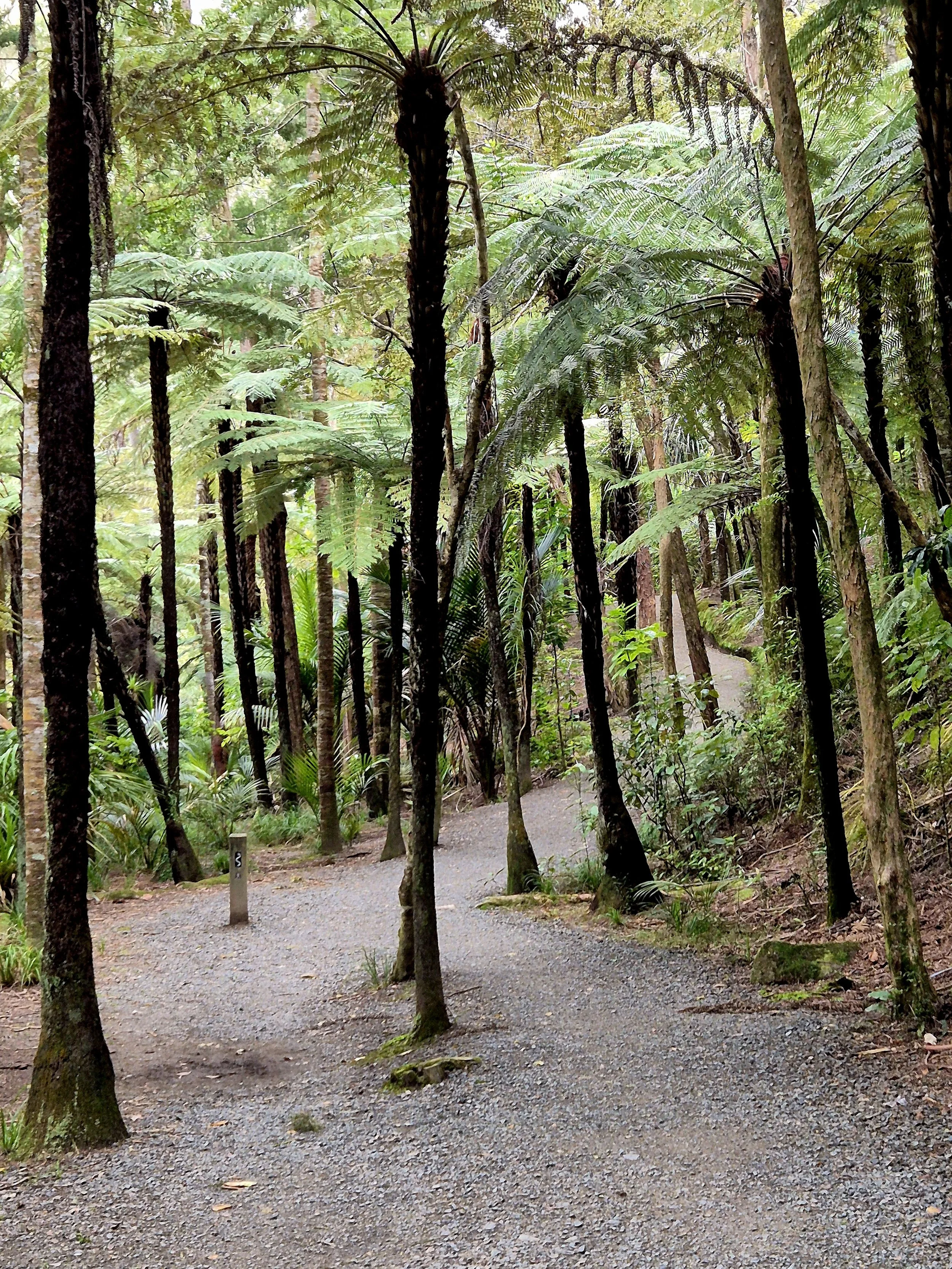
Sometimes the path forward begins with listening to the body we’re actually living in.
For most of my life, I've always had a project — or a dozen — on the go.
Sometimes it was work, with another deadline to meet, problem to solve, or idea to bring into being. Sometimes it was the house or the garden, where there was always another bed to create, another fence to repair, another part of the property to improve. Usually, all those projects ran simultaneously.
And often the other project running alongside everything was me.
There was always something I could improve if I tried hard enough: I could be fitter, thinner, stronger, more productive, more organised, more disciplined, more successful, or simply better at coping with everything I had decided I ought to be able to manage.
Even the things that were supposedly about looking after myself quietly became part of the project. Food was something to get right, walking something I should do, yoga something I needed to practise consistently, and rest something I was allowed once everything else had been attended to.
It has taken me a surprisingly long time to recognise how exhausting it is to live inside a life where almost everything, including yourself, is regarded as a work in progress.

When the body finally says no
In late August, I had little choice but to confront that.
Influenza A turned into a secondary respiratory infection, and what I might once have imagined would be a week or two of being unwell became a month in which my capacity was dramatically reduced.
I know this pattern well, and I’ve come to think of it as The Stack. Very rarely is it one enormous thing that overwhelms me; more often, it’s the accumulation of many different loads arriving at once, while the capacity to carry them shrinks.
It’s the physical workload, emotional strain, financial uncertainty, decisions that need making, projects I’ve taken on, responsibilities I don’t want to neglect, the constant background thinking and worrying, and all the ordinary demands of being a human layered one on top of another.
Individually, many of those things are perfectly manageable, which is partly why The Stack can be so difficult to recognise.
I can keep working, thinking, solving, worrying, planning and pushing while each additional layer quietly reduces the capacity available for the next one. What I’m inclined to notice is the final thing — the tiredness, the overwhelm, the headache, the inability to face one more decision — rather than everything that was already sitting underneath it.
And then, because I’ve spent much of my life treating myself as another project, I have a habit of adding still more to The Stack. I should exercise more, eat better, get that job finished, cope better, or somehow improve my way out of feeling overloaded, until eventually my body finds a way of stopping me that I can no longer negotiate with.
Illness, injury, or exhaustion can become a forced stop when perhaps there were many quieter invitations to stop along the way.
I don’t think that means every illness is caused by stress or that we can somehow prevent ourselves from becoming sick by listening hard enough. Viruses remain viruses, bodies are bodies, and sometimes we simply get ill.
What interests me more is the pattern of repeatedly overriding ourselves until stopping only seems legitimate when we have no other choice.
Perhaps one foundation of feeling safer within ourselves is learning that our body doesn’t have to incapacitate us before its needs are allowed to matter.
The walk I didn't take
One afternoon recently, after a weekend spent working in the garden, my hubby asked whether I wanted to take our little dog Gizmo for a walk.
On the face of it, it sounded lovely.
I enjoy walking. I’m gradually rebuilding my fitness after being ill, the weather was beautiful, and walking is one of the things I know supports me enormously.
There was just one problem.
I didn't want to go.
Over the weekend I had already spent around seven hours gardening, shifting bricks, planting and doing the kind of physical work that leaves you pleasantly aware that your muscles have been earning their keep.
Hubby had taken on the heavier jobs, digging the bigger holes and shifting pavers, while I worked alongside him, and by Sunday afternoon my body was telling me very clearly that it had done enough.
What I actually wanted was to sit in the courtyard in the sunshine with a cold ginger beer and ice, do absolutely nothing for a while, and then have a bath.
So that's what I did. My hubby took Gizmo for his walk, while I sat in the courtyard and let the gardening be enough.
It was an utterly unremarkable decision, and perhaps that's exactly why it mattered, because there was a time when I would almost certainly have gone for the walk. Not because I couldn’t have made myself go, but because being capable of doing something no longer seemed reason enough to spend the energy on it.
Listening isn't the same as obeying
“Listen to your body” sounds wonderfully simple until you actually try, because our bodies are complicated, and so are the lives we inhabit.
Sometimes tiredness means we need rest; other times, a gentle walk might be exactly what helps us feel better.
Reluctance can signal that our capacity is depleted, but other times it may not. Perhaps this is where The Stack becomes useful, because a signal rarely exists in isolation.
The question isn’t simply whether walking, gardening, working, or resting is good for us. It’s what that thing adds to, or takes from, everything our nervous system is already carrying today.
If our body is telling us it doesn’t want to do something, we can become curious about that too. Is this genuine depletion? Or is it fear, habit, discomfort with doing something unfamiliar, or something else entirely?
Our bodies also carry histories.
For those of us who have spent years overriding hunger, fatigue, pain, overstimulation, or emotion, the signals themselves may be difficult to recognise, while trauma can make inhabiting the body complicated in ways that no cheerful instruction to “trust yourself” can resolve.
So perhaps the invitation isn't simply to obey whatever our body happens to say in a particular moment. Perhaps it's to become curious about it.
What am I noticing?
What might this be telling me?
What else is happening around me?
What happens when I respond differently?
And what do I learn from what happens next?
Over time, those ordinary observations begin creating something we may not have had before: evidence about how our own nervous system works, and a repeated message that we trust ourselves.
What if nothing needs improving today?
I’ve been thinking about this in another way too, because underneath the question of whether I needed that walk was something much larger.
What if I don't always have to be working towards a better version of myself?
That question feels almost embarrassingly radical to me.
What if I walk because being beside the river gives me pleasure rather than because I need to improve my fitness? What if I garden because I love putting my hands in the soil and imagining what might grow there, rather than because the garden needs finishing? What if I eat food because it nourishes me and tastes wonderful, without turning it into another regime against which I can measure my performance?
And what if sometimes I sit in the sunshine with a ginger beer simply because that is what I want to be doing?
Perhaps part of this is giving ordinary things their original meaning back. Walking can be wandering, companionship, and the pleasure of being beside the river, rather than another unit of exercise. Gardening can be creativity, sensory pleasure and making a place feel like home, rather than another project to finish. Food can be nourishment and enjoyment without becoming an elaborate regimen, and rest can simply be rest without needing to justify itself by improving anything.
There can still be things I want to learn, create, change and experience, because my high sensation-seeking side would probably stage a small rebellion if I attempted to turn my life into an endless exercise in tranquillity.
But perhaps there is a difference between growing because we're alive and treating ourselves as though we're perpetually inadequate in our current form.
One feels expansive while the other has kept me running for much of my life.
Learning that stopping is safe
In the last post, I wrote about the strange experience of building a safer life before knowing how to live safely within it.
I think this is part of what comes next.
We can change our external conditions, reduce unnecessary demands, and surround ourselves with more of the things that help our nervous system settle, but another relationship is being built underneath all of that: the relationship we have with ourselves.
If my body repeatedly tells me it is tired and I continually override it, what does it learn?
If hunger is inconvenient, pain something to push through, overstimulation something I should cope with, and rest something I have to earn, then perhaps the environment my nervous system lives in isn't only the house, workplace, relationships, and world around me.
I am part of its environment too.
And that raises a question I've been sitting with for some time: How can my body learn that I am safe with myself if I continually ignore what it tells me?
Perhaps self-trust grows partly through discovering that when our body whispers enough, we sometimes listen before it has to shout.
Grounded before embodied
This is where Grounded begins to reach towards something deeper.
Being grounded isn't about achieving a permanently calm nervous system or becoming exceptionally good at interpreting every bodily sensation. Nor is it about withdrawing from challenge, ambition, adventure or all the things that make us feel vibrantly alive.
It's about beginning to understand the particular nervous system we're living with, the conditions that affect it and the patterns we've accumulated over a lifetime, while creating enough space to notice what happens inside us before automatically overriding it.
For some of us, fully inhabiting our bodies may not feel particularly safe at first. There may be trauma there, old beliefs, difficult emotions, and decades of messages about what our bodies should look like, how much they should achieve, and how little inconvenience their needs should cause.
We'll explore that deeper relationship with the body much more as A Balanced Life eventually moves from Grounded into Embodiment.
A little more from me
There was another part of this conversation I wanted to explore — what happens when so much of our life has been spent treating ourselves as another project to improve.
In the video below, I talk about what that has looked like in my own life, why changing capacity in midlife has made me question some long-held expectations of myself, and what began to shift when I stopped asking how to get back to who I used to be.
When You Stop Treating Yourself as a Project
What if growth, health and wellbeing didn’t have to be the price we paid for believing we were already enough? I reflect on midlife, menopause, changing capacity, and learning to let the body I’m actually living in now have a genuine vote.
If these conversations resonate with you, you’re welcome to join the next one. I write about nervous-system safety, sensitivity, capacity and creating a life that works with who we are rather than continually overriding ourselves.
